Sticky Innovation is an Honors Course combining the disciplines of Engineering and Design to address and learn about the problems bees are facing in the modern age. This particular page will allow for the expression of what I have personally learned and experienced through this class.
Green Acres Site Visit

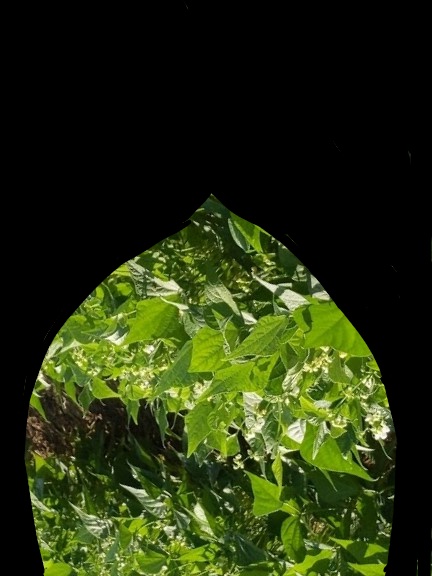

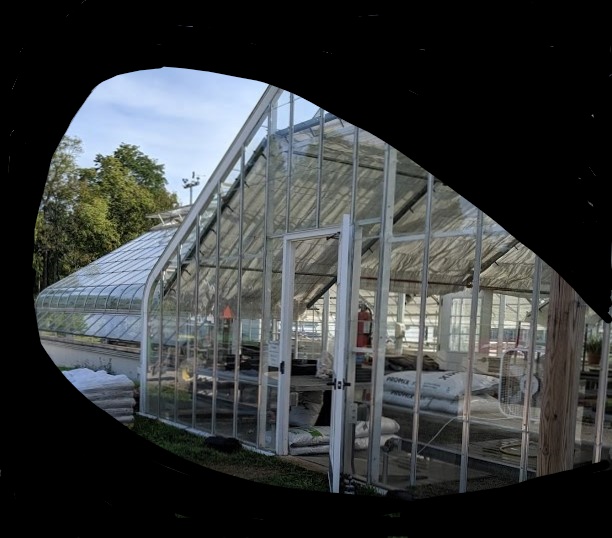
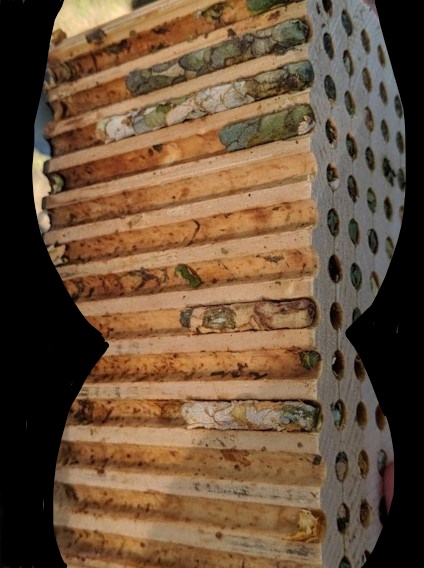
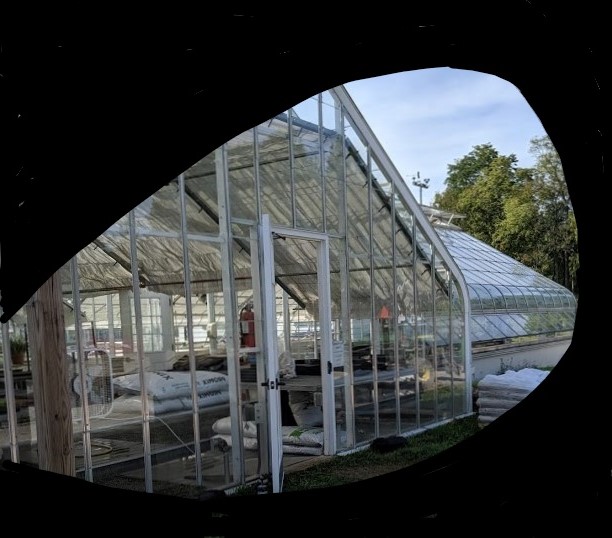

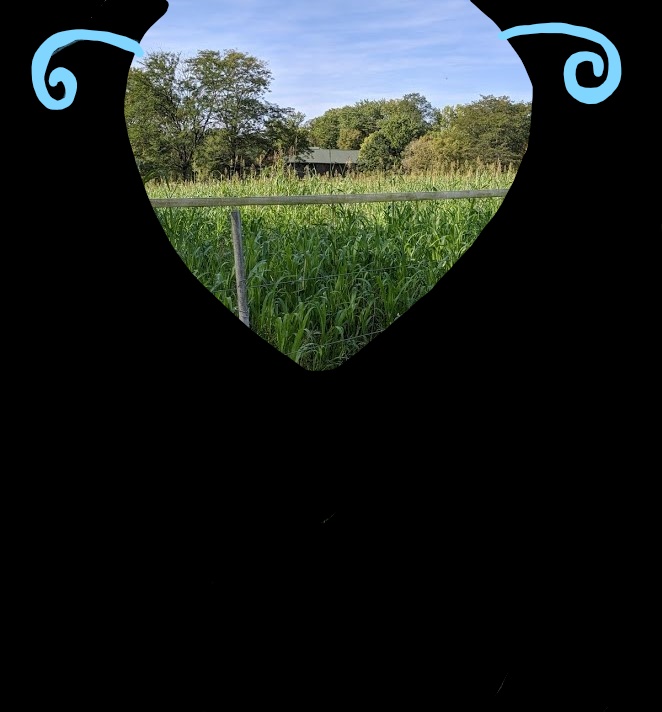

All photos in this image were taken by me during the trip, and then edited once I was able to really think about my experiences while at Green Acres.
The Green Acres farm is a farm located in Cincinnati, Ohio dedicated to sustainable agriculture and local produce. At the center of this entire operation are bees. Without bees, we would be left without almost all of the foods we eat. Let’s take corn, corn is in a large amount of products available in the food marker, from fresh corn, to tortillas, to virtually any product that tastes sweet. Each individual kernel of corn must be pollinated. When you think about the mass amount of pollination that must take place for corn, or any other flowering fruit crop, we realize the true significance of bees. Not just honey bees, but all bees. Native bees are often incredible pollinators, but if they don’t have the resources to survive, then we are losing a wonderful bit of biodiversity, and a great contributor to our food system. Bees should no longer be{e} something we overlook or forget about. Bees are a necessity, period. I’m hoping that through this experience and the course, that I will be able to take what I’ve learned and apply it to the world around me and make a difference. Let’s save those amazing native pollinators hanging around in our backyards! Plant some native flowers, grocery shop mindfully, and lastly, let’s learn about the problems at hand.
Innovation in Advising
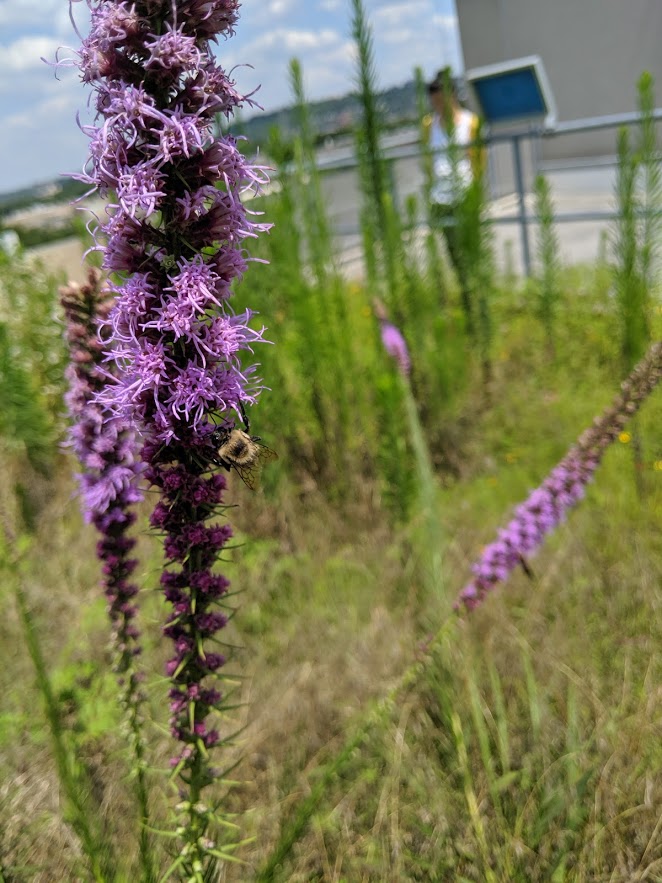
This photo was taken from the rooftop of my most recent co-op rotation: The Metropolitan Sewer District of Greater Cincinnati.
In my interview with an innovator, I sat down with Dr. Bethany Hanson, the co-op adviser for Environmental Engineers, and some of the Mechanical Engineers as well. Throughout her time here as our co-op adviser, we have felt that Dr. Hanson goes above and beyond in making sure our co-op experience is tailored to what we want it to be. She meets you where you are, and makes sure that your voice is heard. This approach is often hard to find in engineering, let alone co-op advising, so it was refreshing for Dr. Hanson to take this approach. There’s a lot to apreciate with Dr. Hanson, so let’s take a minute to focus on a few:
- Dr. Hanson is incredibly compassionate
- Dr. Hanson works to balance work life and family life, and that can be a tough line to walk
- Dr. Hanson takes risks to follow her heart
- Dr. Hanson encourages reflection, and practices what she preaches
- Dr. Hanson is a runner, which can be incredibly hard to give time to with work, social, and family commitments.
- Dr. Hanson is a role model for all her students.
Needless to say, I feel that Dr. Hanson approach to advising is different than what we have experienced before, and in a field that is often much of the same, having a new approach is wild. Innovator is definitely a term I would use to describe Dr. Hanson. A role model is another way to describe Dr. Hanson.
Book Club Recap
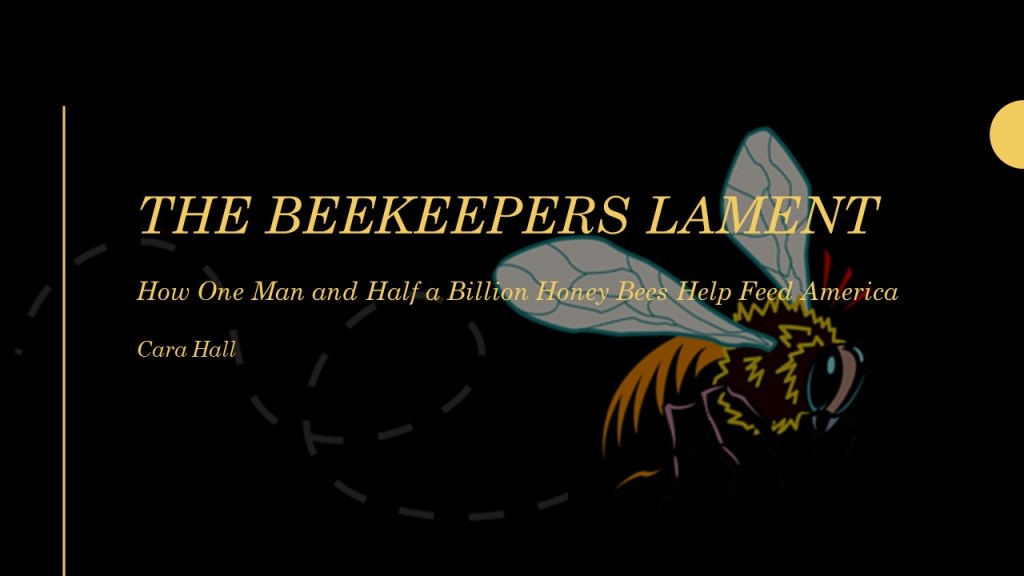
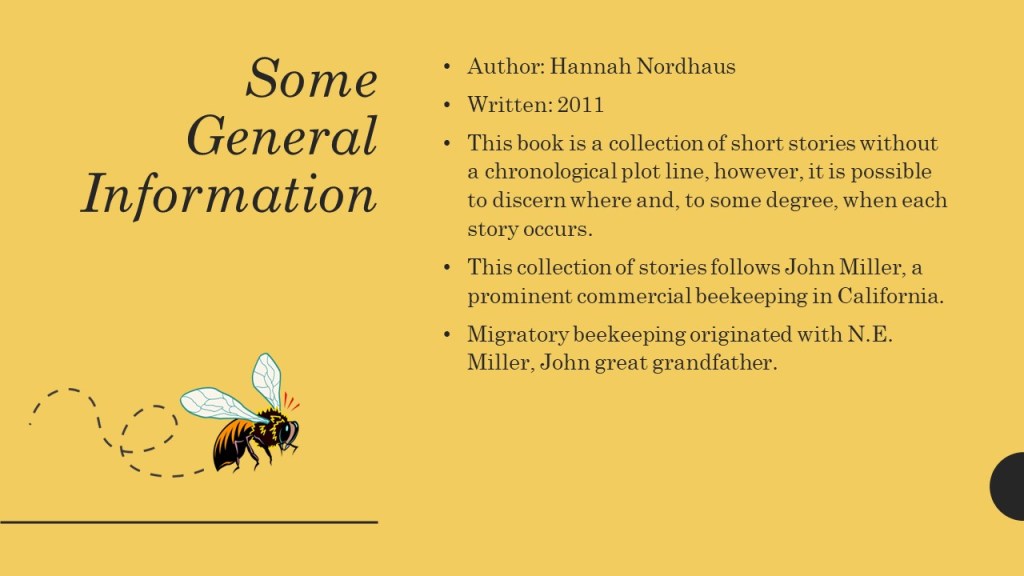
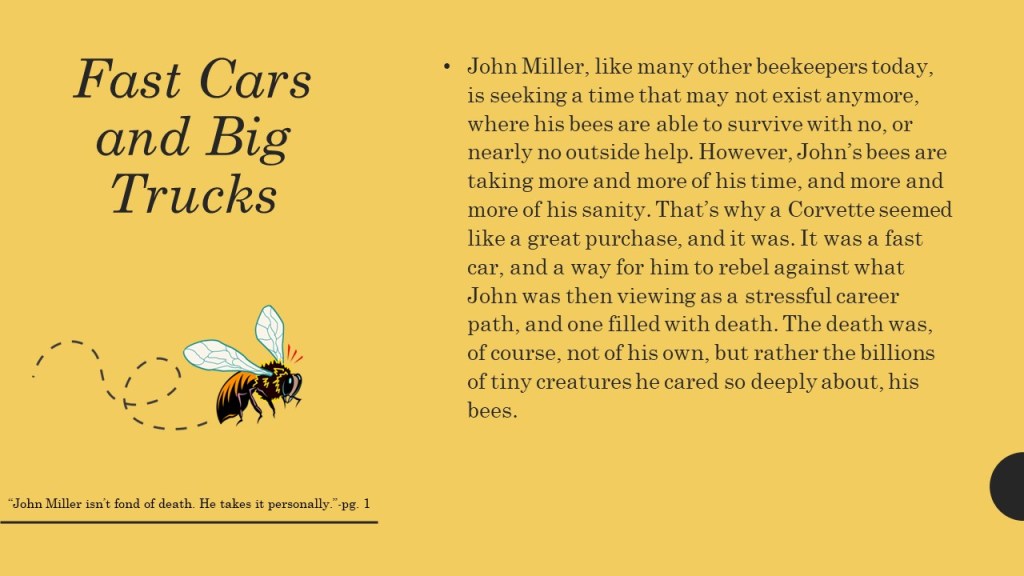
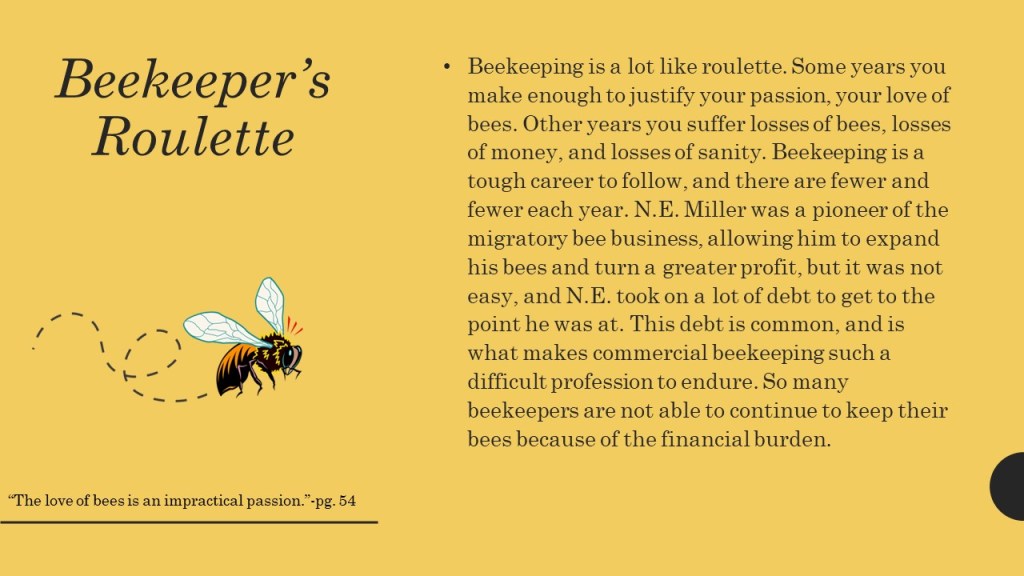
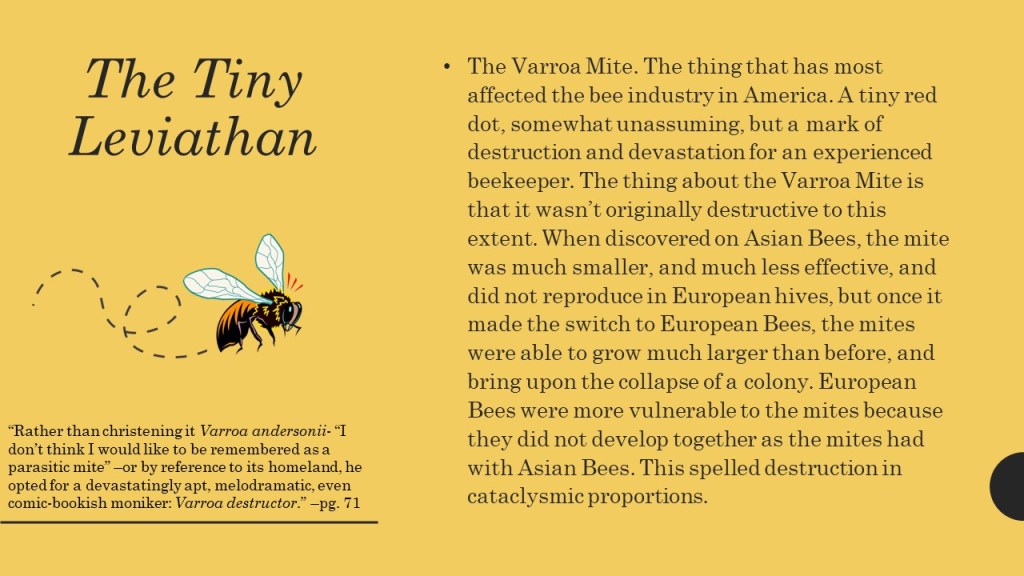
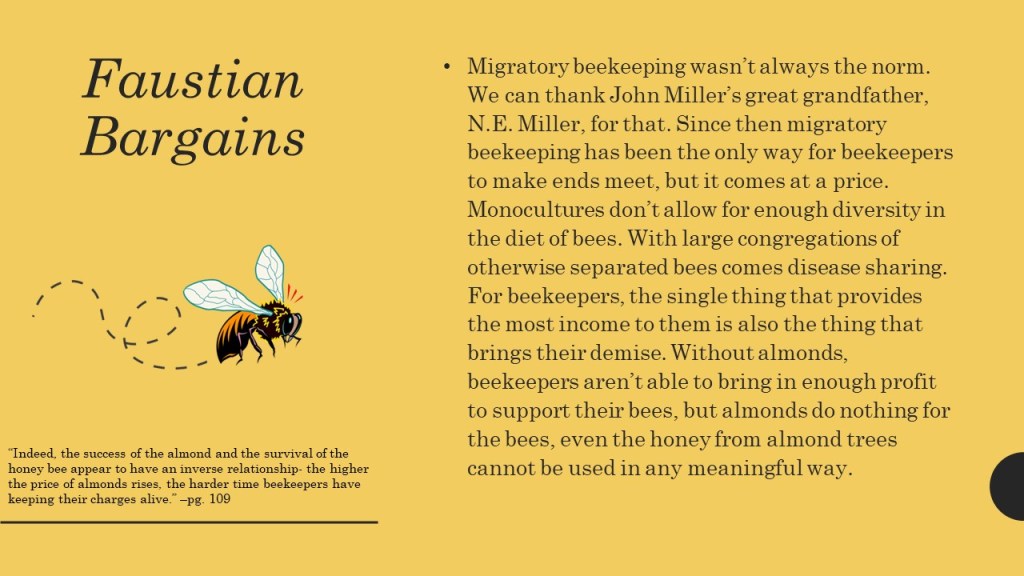
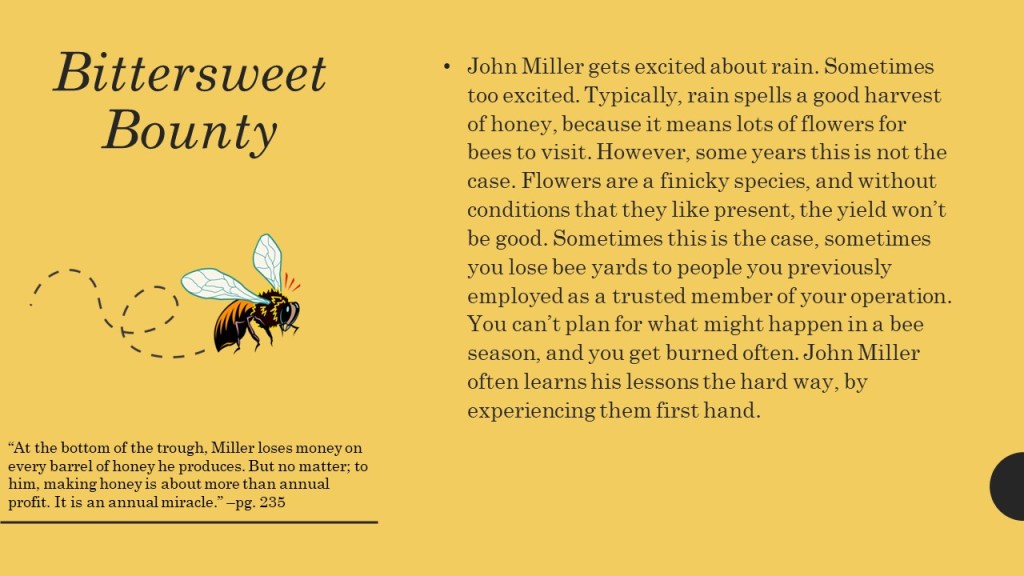
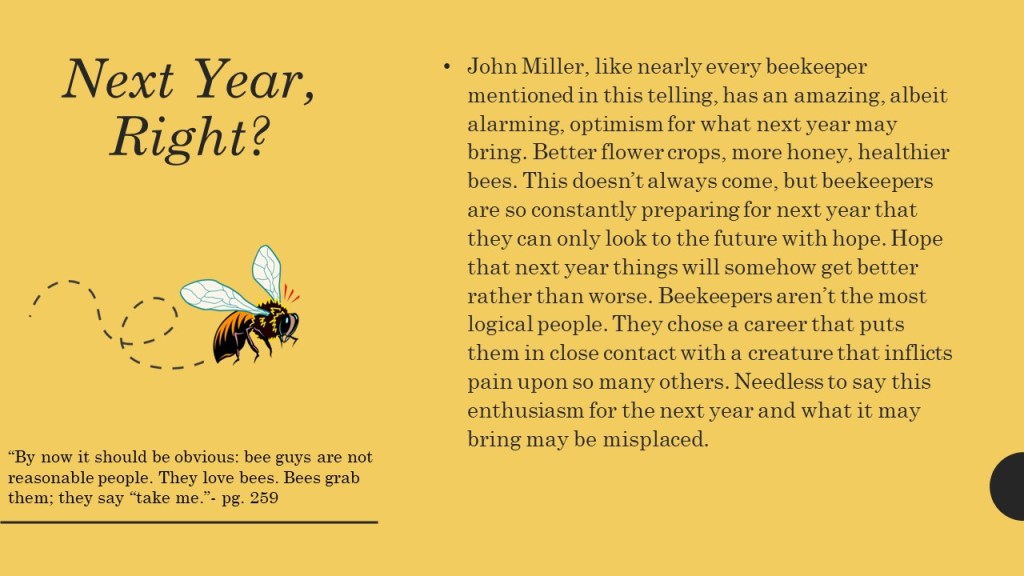
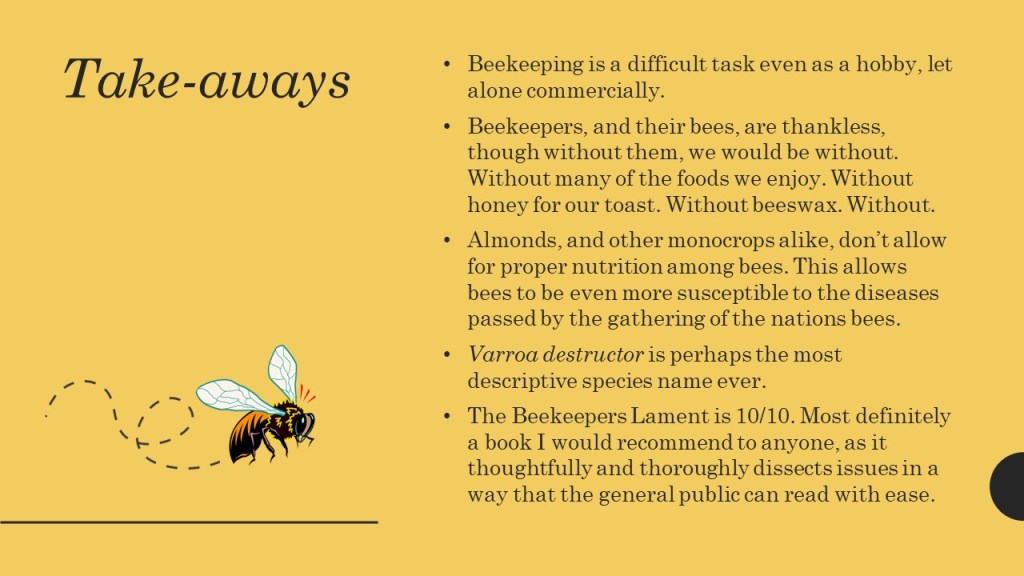
The Beekeepers Lament: How One Man and Half a Billion Bees Help Feed America. Sounds ominous right? To some degree, the book was definitely sad at times, funny at others, but it’s hard to be joyful when writing about all the factors coming together to cause the decline of bees in America. Hannah ___’s approach to this novel is something to behold, as she follows many different plot lines, different life events, of John Miller, a commercial beekeeper who is worth a book on his own. Add in the bees and you have a dynamite story that genuine beckons you to keep reading, chapter after chapter. I am attaching my slides from my presentation where you can find a chapter breakdown, but again, this is a great book.

The Ideal Bee
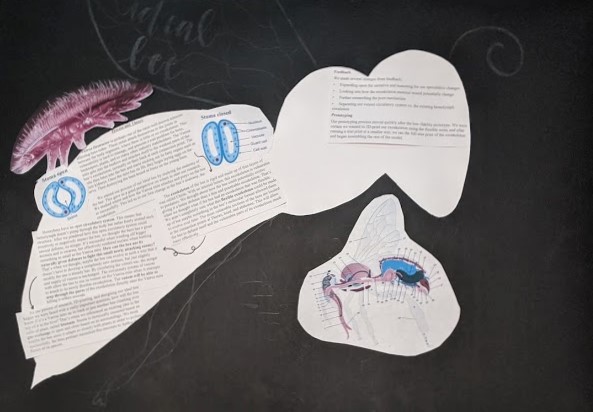
For our Ideal Bee project, our team took a crack at solving the bees’ problem with varroa destructor, the type of mite that have been wreaking havoc over millions of bees in the United States and over the entire world. For this, we looked specifically at the exoskeleton of the bee and how it might be optimized to help the bee the most. First we decided it might be interesting to look at a flexible exoskeleton to be able to protect the weak spots on a bee, which are located at the joints between the body segments. From there we looked to redesign the venom mechanism, to allow the venom to seep through pores in the newly flexible exoskeleton, allowing small droplets to be dispensed through pore-like structures. These pore-like structures would use the chemical signature of the varroa mite to determine if venom would need to be dosed. From there, we redesigned the venom sac to include a small circulation system, able to supply these pores with venom should it be needed. It’s important to note that these are theoretical evolutionary changes, and while I feel they would be helpful, there are always unintended consequences of changes.
The Bee Experience
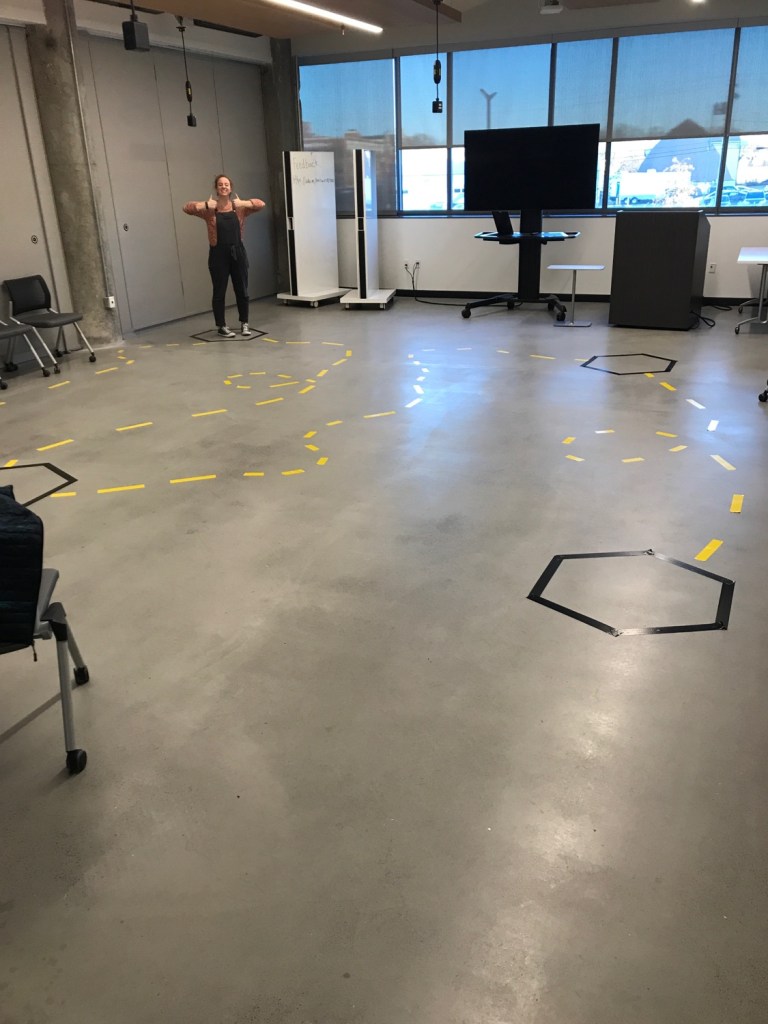
For our project, we decided to make an immersive experience leading you through what a bee might experience leading up to colony collapse. In order to bring this to life, we decided on a travelling museum exhibit to fully flesh out our ideas. In addition, we worked with some marketing methods, such as using social media, using flyers, and lastly, using a living wall to advertise the exhibit. The living wall would be interactive, with some educational factors. The living walls would be sponsered by a local community organization and would be a permanent fixture in the community, providing a healthy habitat for bees as well as a bit of art to add to the otherwise urban landscape. The flyers and social media advertising can be seen below. There were 4 exhibits, one for each of the following;
- Varroa Mites
- Migratory Beekeeping (In Particular Cross-Country Transportation)
- Pesticides
- Monoculture
In each of these exhibits, each member of the group was able to bring to life their particular perspective on colony collapse disorder, as well as how to present this information. It was a nice way to bring the individualism in the group the the project, as opposed to just trying to have one identity and one voice. The topic I chose was cross-country transportation. In the migratory beekeeping scene, bees are transported thousands of miles from crop to crop in order to pollinate for the food demand. Bees are confined to their hives, and conditions are less than optimal. Often cold, dark, and rough, in addition to bees basically suffocating in the own poop. Sometimes there are crashes that kill thousands of bees. This isn’t even mentioning the stress trips like this put bees under, and the monocultures the bees are headed to don’t provide much nutrition.
Let’s build something together.
 Take Cara Yourself